Posture Correct
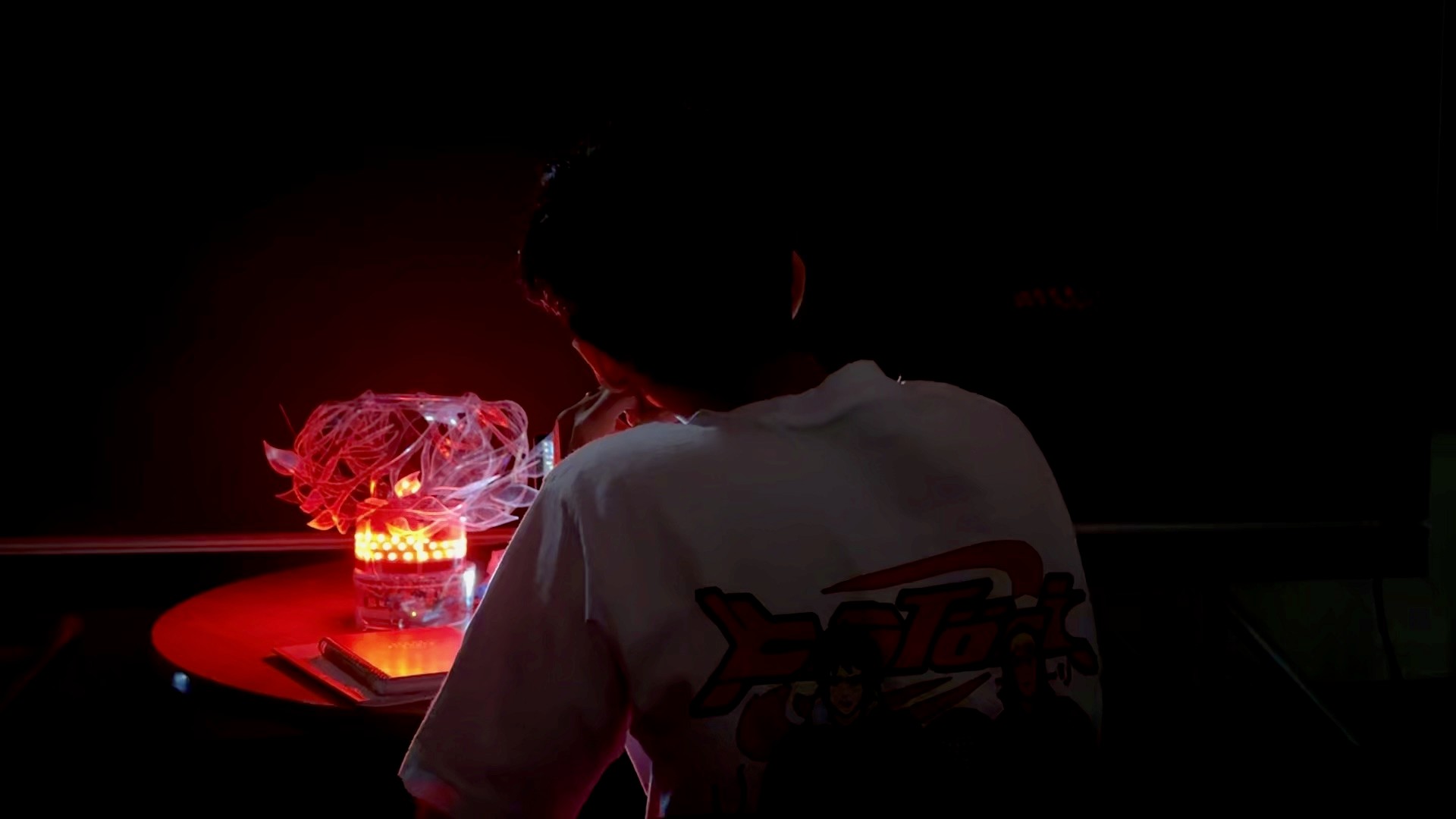
A responsive desk lamp that detects posture in real time and encourages healthier sitting habits
Role
Interaction & Visual Designer
Timeline
2 Months, 2024
Team
3 person interdisciplinary team
Skills
Speculative Design
.
Hardware Design
.
Interaction Design
.
Tools
Arduino, P5.js, ML5 (PoseNet), Figma
Overview
This project was a key component of our master’s program coursework with professor Behnaz Farahi. As part of the requirements, we were tasked with integrating compliant mechanisms and physical computing into our design. This dual emphasis on mechanical and computational elements inspired us to explore innovative solutions that seamlessly blended these fields, pushing us to think creatively and develop a unique, practical application.
Problem
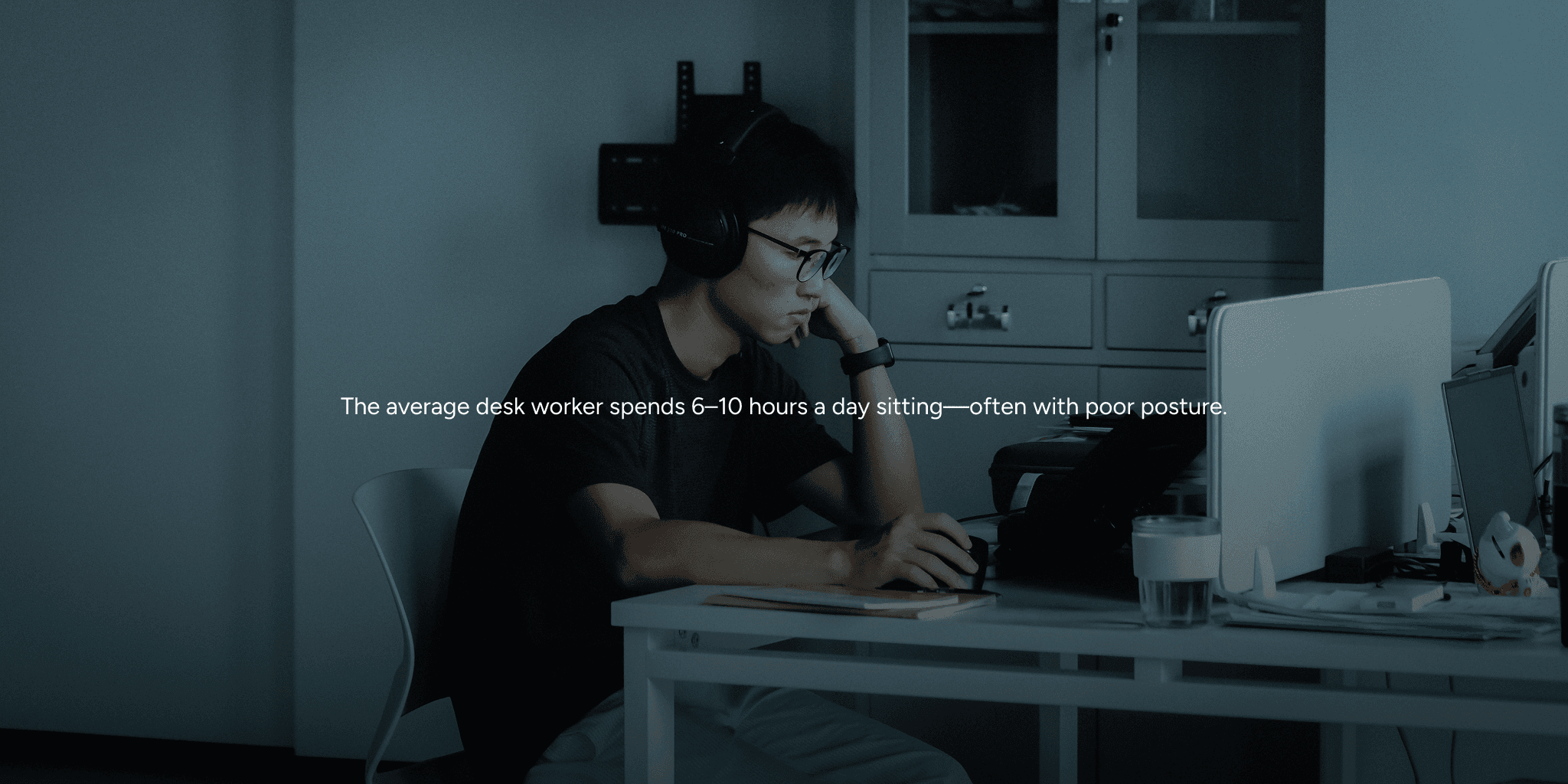
Prolonged sitting leads to poor posture, but feedback is rarely immediate or continuous
Remote workers, students, and office workers spend extended hours seated. Poor posture accumulates gradually, often unnoticed, leading to back pain, neck strain, and long-term musculoskeletal issues.
Opportunity
Can a familiar object gently reshape behavior through interaction?
We proposed creating a desk lamp—an object already present in workspaces could serve as an ambient posture guide. The opportunity was to design:
Ambient AwarenessProvide continuous, real-time feedback without interrupting the user’s workflow or attention. | Embodied InteractionTranslate posture into physical and visual changes, making feedback intuitive and immediately understandable. | Behavioral ReinforcementEncourage long-term habit formation by rewarding good posture and gently correcting poor posture. |
Solution
A lamp that visually and physically responds to posture
A posture-detecting desk lamp that expands and illuminates red to signal to the user when they should correct their posture.
PoseNet for posture detection | Real-time P5.js visualization (try it yourself!)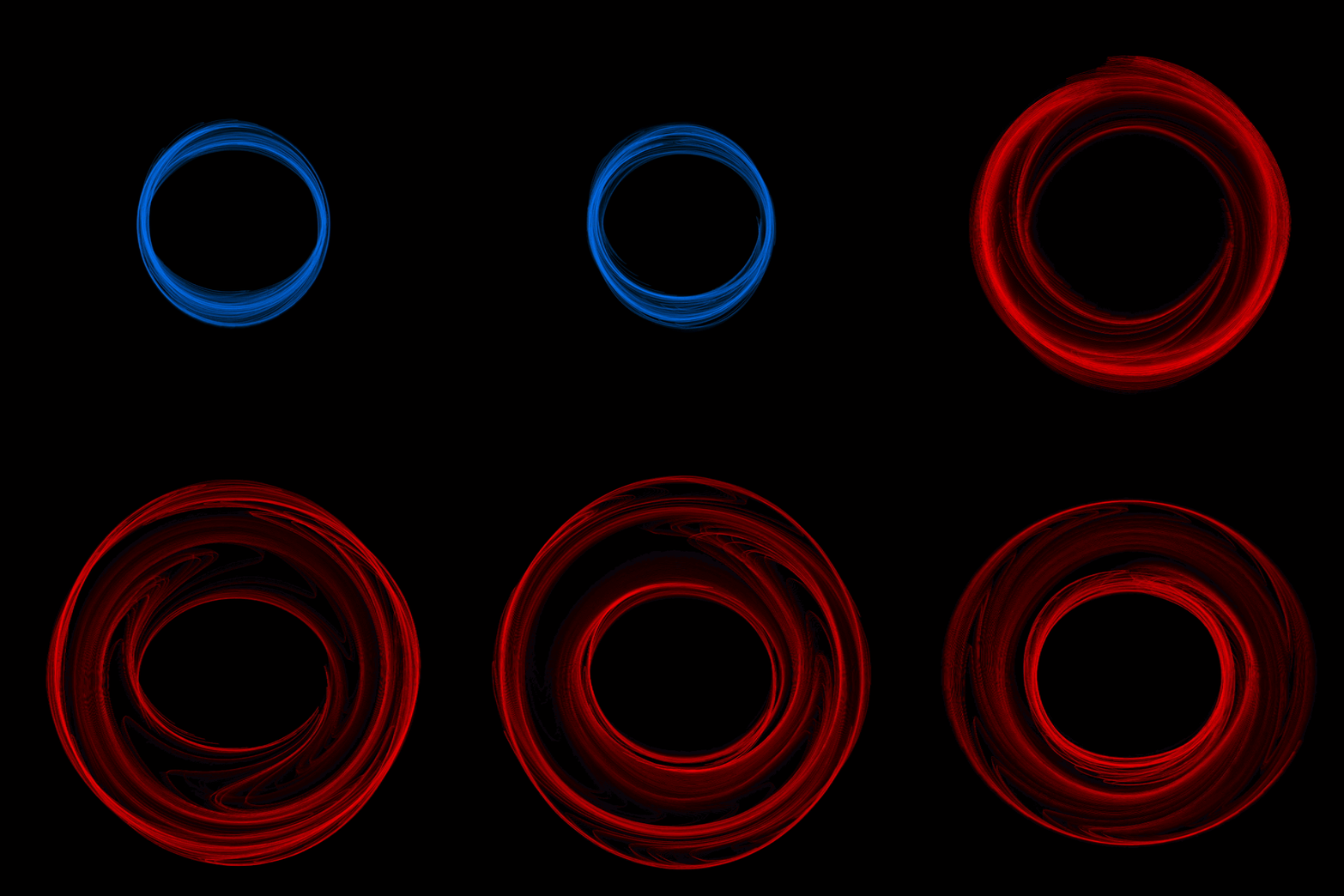 |
LED lighting feedback | Stepper motor-driven compression |
Design Approach
Translating posture awareness into intuitive, physical interaction
The design focuses on turning posture data into immediate, understandable feedback through light and movement. Instead of relying on alerts or notifications, the system uses physical transformation to communicate changes in posture in a way that feels natural and intuitive.
To support this, the form was inspired by organic structures, allowing the lamp to move fluidly and reinforce its feedback through motion. Visual and physical responses are designed to be noticeable without interrupting the user’s workflow.

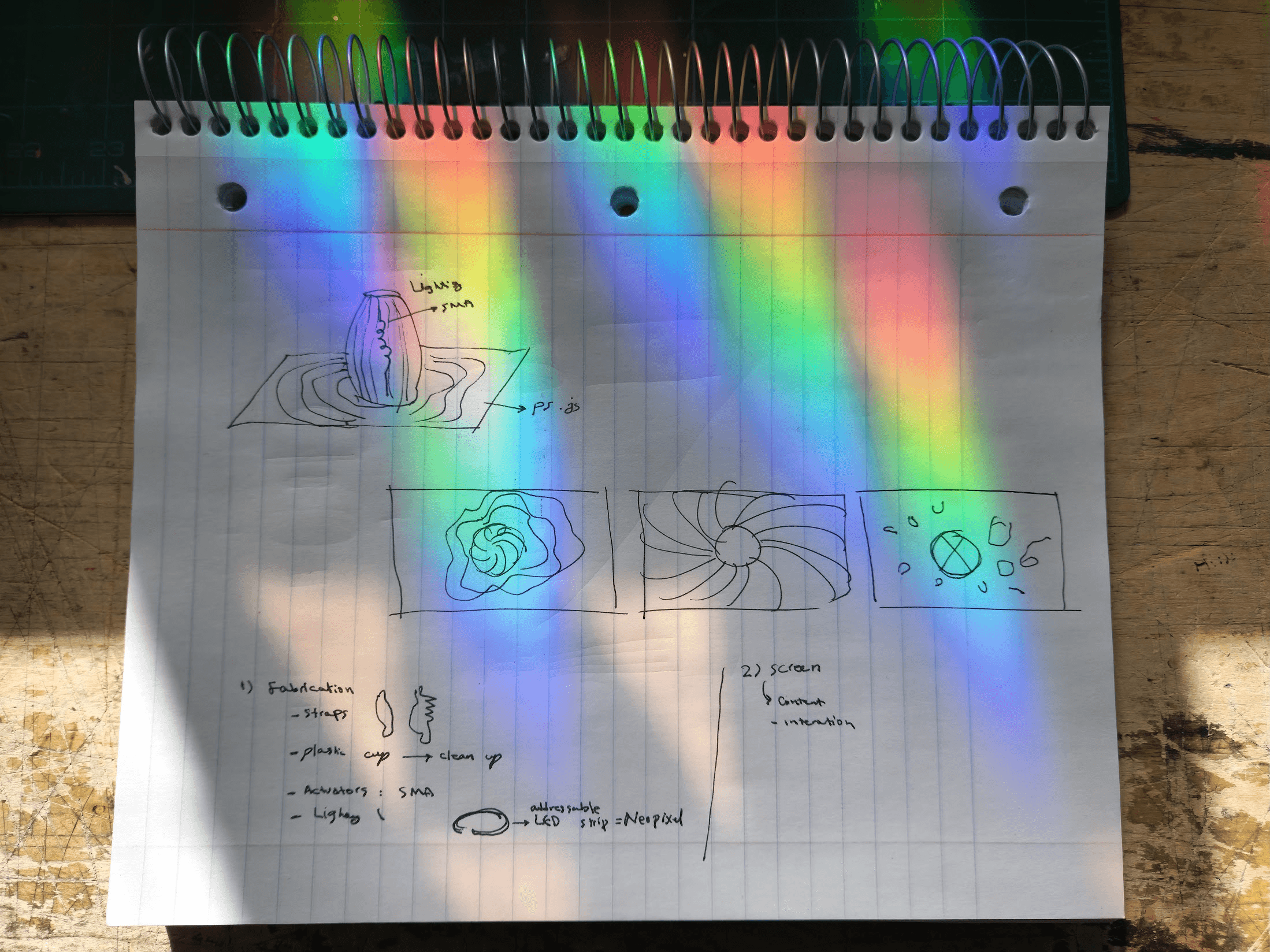
Research & Exploration
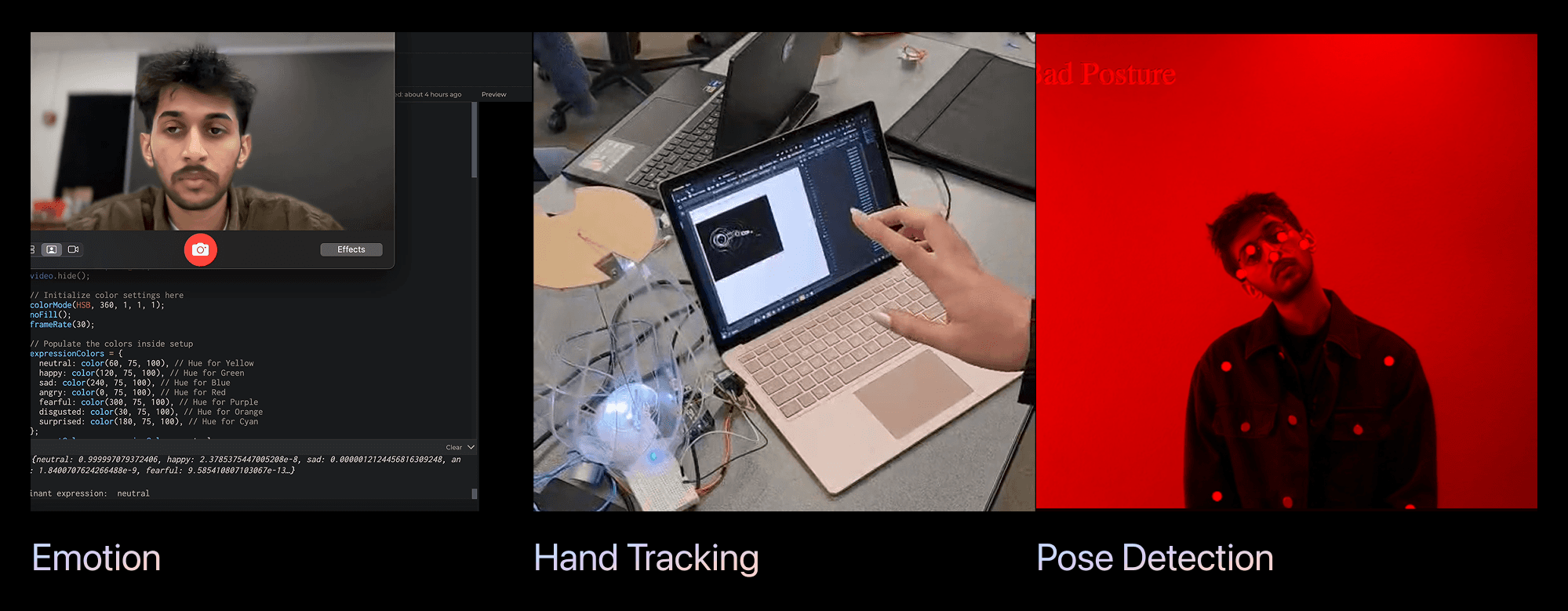
From compliant mechanisms to computer vision
This project required integrating compliant mechanisms and physical computing:
Interaction exploration |
|---|
|
Material Research |
|---|
|

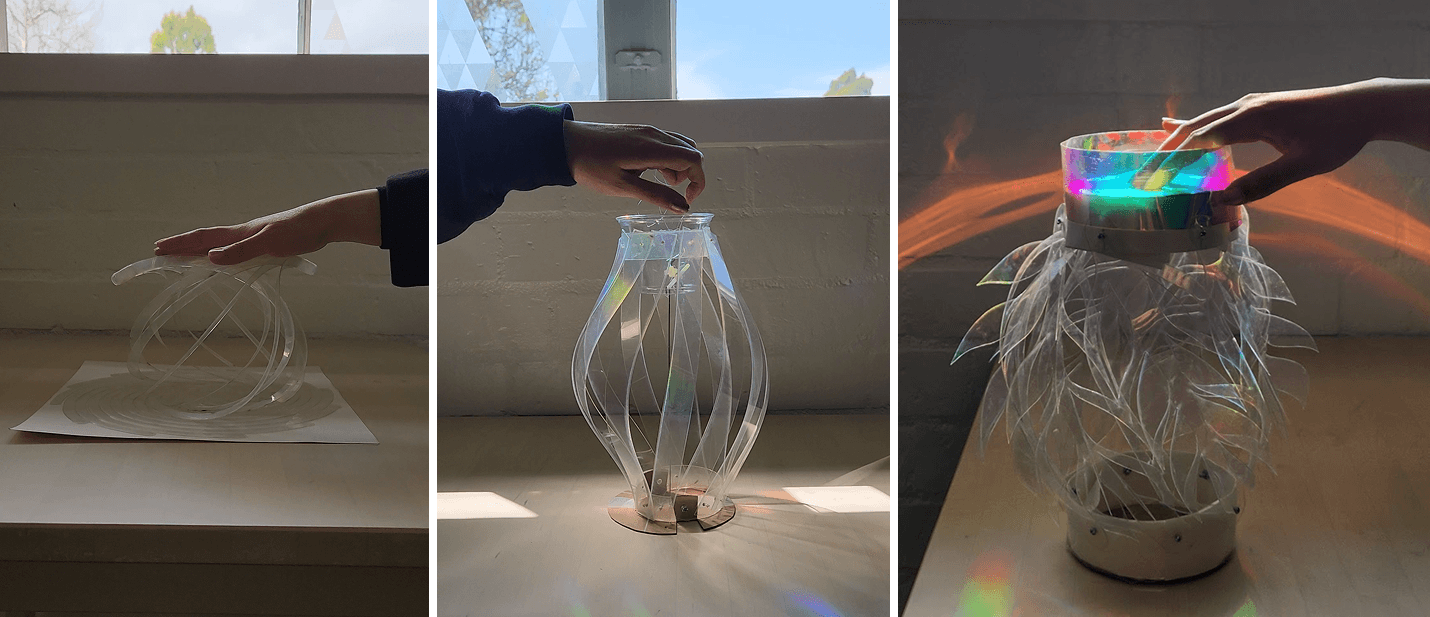
Process
Iterating mechanical structure and computational logic simultaneously
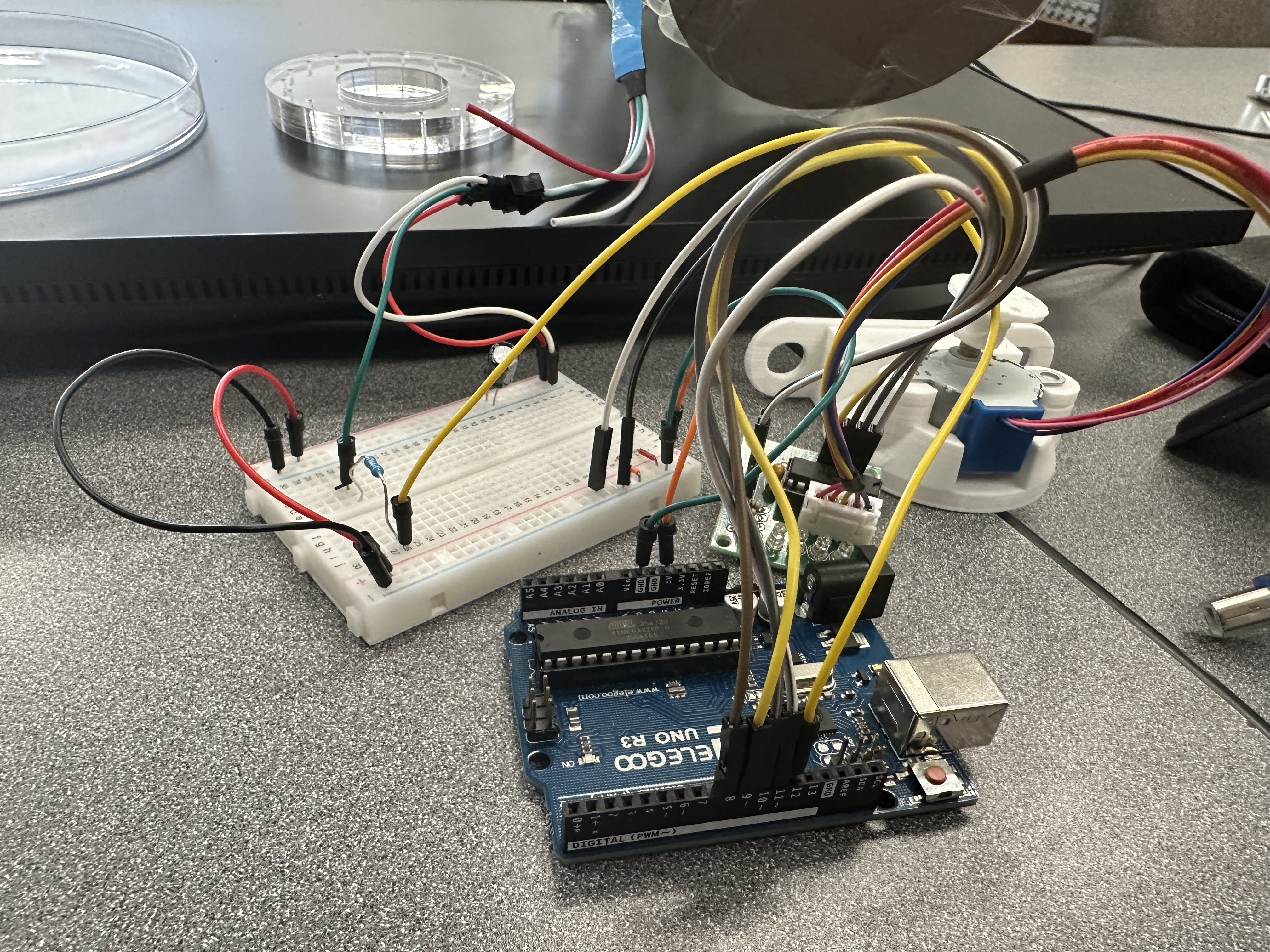
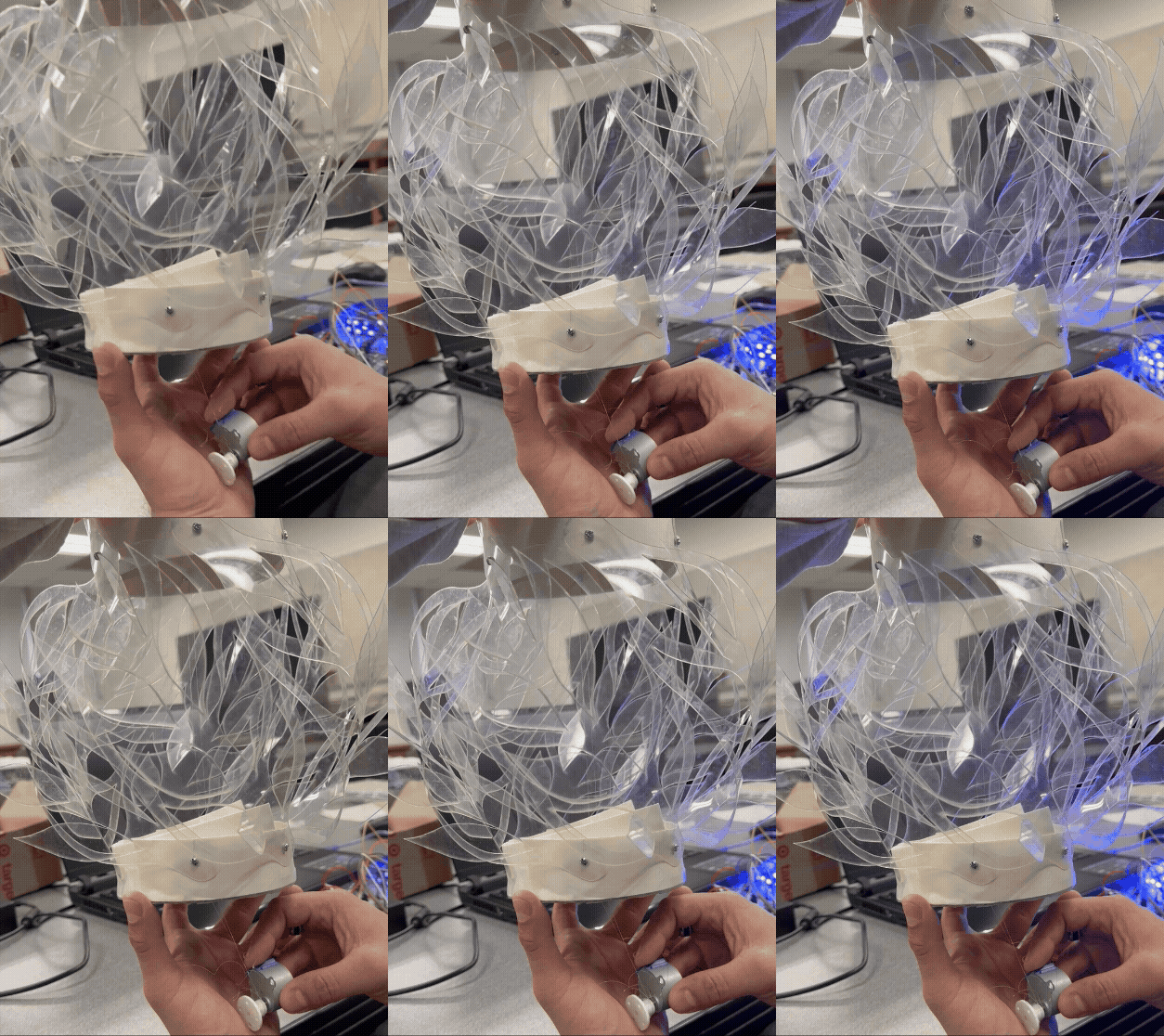
Iteration 1: Basic Trigger System | Iteration 2: LED Feedback Integration | Iteration 3: Computer Vision Integration |
|---|---|---|
|
|
|
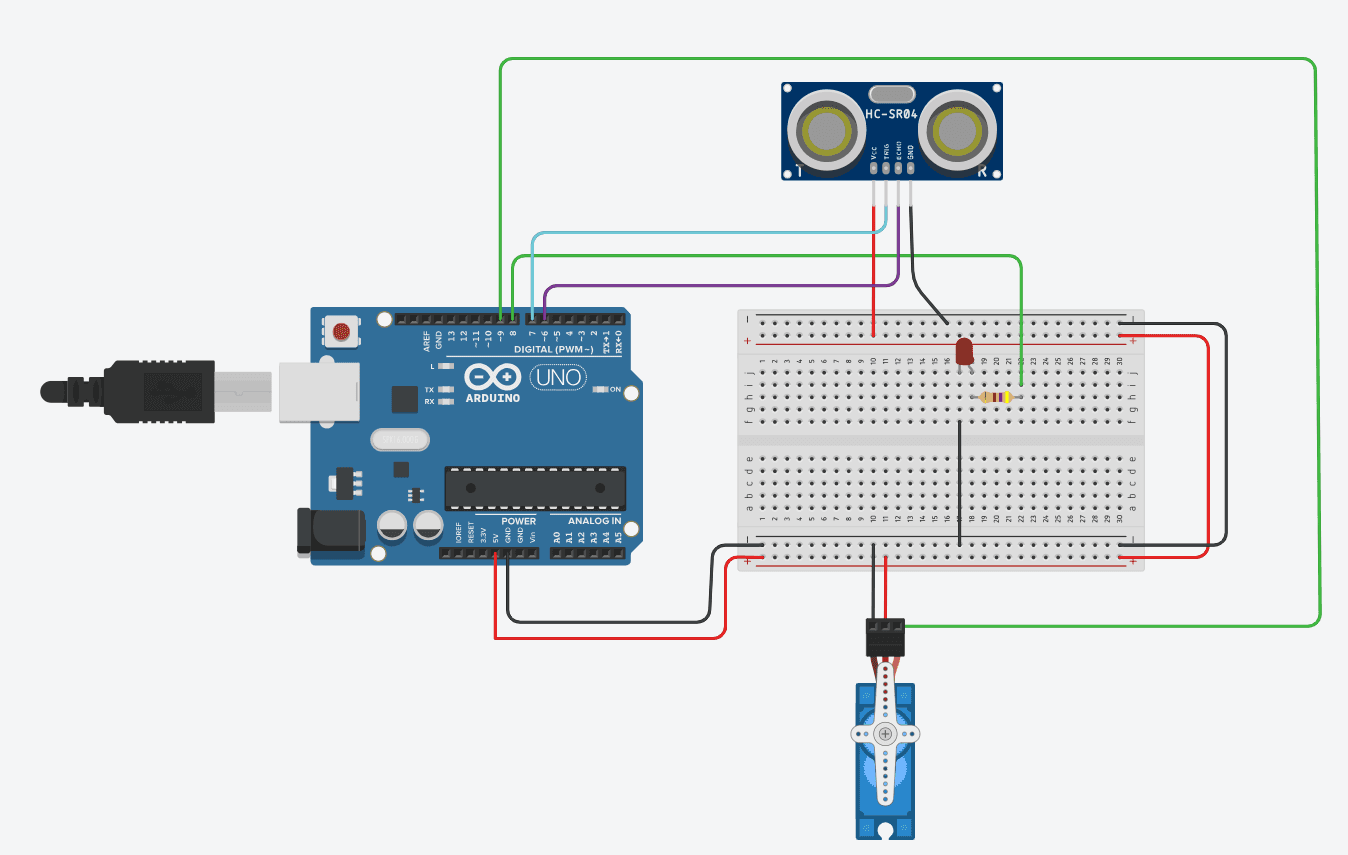
Interaction model
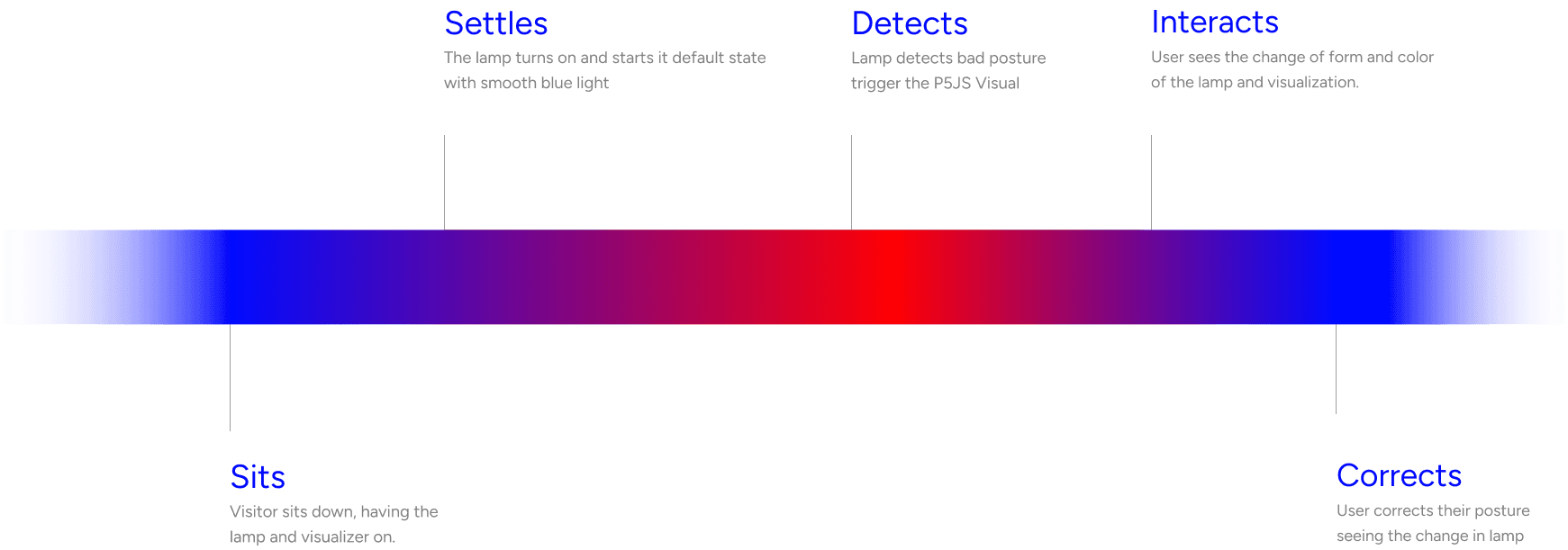
Detect → Interpret → Respond
PoseNet detects key body joints
System classifies posture as good or poor
LED color changes
Motor compresses or relaxes structure
On-screen visualization reinforces feedback
The loop runs continuously to support habit formation.
Prototype
A responsive object that physically mirrors user posture
The final prototype includes:
Acrylic seaweed-inspired compliant strips
Embedded LED strip lighting
Stepper motor compression system
Real-time PoseNet visualization screen
The lamp functions as both environmental object and behavioral feedback device.
Challenges
Synchronizing hardware, vision models, and mechanical motion
Troubleshooting stepper motor compression mechanics
Ensuring physical movement aligned with software signals
The motor twisted unevenly, leading to repeated mechanical adjustments. Despite multiple iterations, we were not able to fully achieve the intended compression mechanism in the final build.
Reflection
Learning the realities of collaboration and hardware iteration
Although our final product was successful, I learned that dividing work without structured collaboration can create communication gaps. In future team projects, I would prioritize shared checkpoints and clearer visibility across roles.
This project also revealed how different hardware design is from digital design. Physical prototyping is costly and time-intensive, requiring careful planning and selective iteration. That constraint strengthened my appreciation for hardware designers and sharpened my thinking around feasibility and trade-offs.